Skip to content

Perfume

Your fragrance, your bottle, your name on it.

We formulate, fill and finish fragrance under your brand — from a single signature scent to a full range. You own the formula, the bottle, the carton and the customer. Nothing leaves here carrying our name.

What we make

Formats we already run.

We manage production end to end through vetted, licensed partner units — you get one point of contact, one quality standard and one invoice.

Eau de parfum
The long-wear concentration most signature scents sit at.
Eau de toilette
Lighter, more affordable per unit, higher repeat purchase.
Attars & oils
Alcohol-free, concentrated, traditional roll-on or dab format.
Body mists
Low concentration, high volume, the usual entry product for a new brand.
Roll-ons
Small format, travel and sampling, strong gifting margin.
Room & linen sprays
Same fragrance family as your personal range, different use.
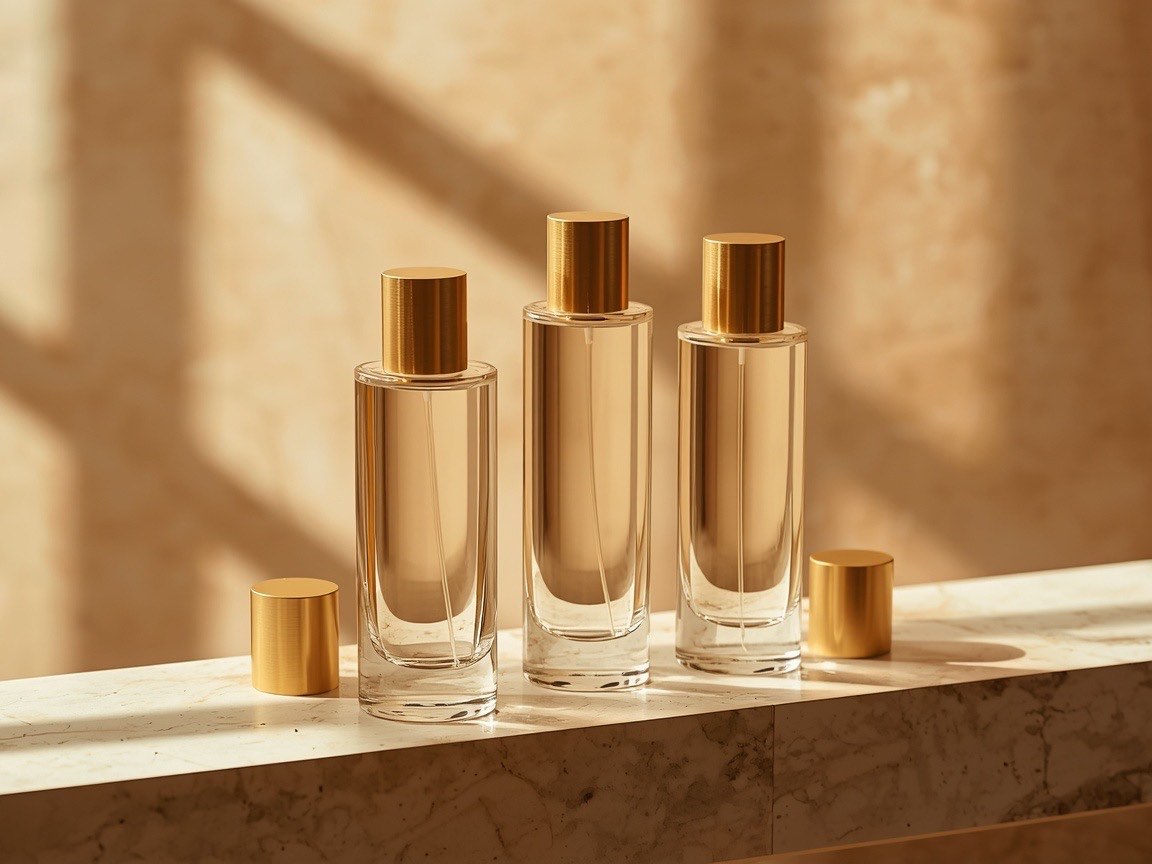
Unbranded glass perfume bottles with brushed gold caps on a stone surface

What to know first

The things that decide your cost.

Most of what goes wrong on a first production run was decided before anyone poured anything. These are the choices worth understanding before you brief us — whoever you end up making it with.

01

Concentration is the decision that sets your cost

Fragrance strength is a percentage of aromatic compound in the base. Eau de parfum typically runs around 15-20%, eau de toilette around 5-15%, and body mists around 1-3%. That single number drives how long the scent lasts on skin, what it costs you per bottle, and how it should be priced on shelf. Most first-time brands ask for eau de parfum because it sounds premium, then discover the unit cost does not fit the price they wanted to sell at. Deciding concentration early, against a target retail price, saves a reformulation later.

02

The bottle costs more than people expect

On a short run, glass, cap, pump and collar together frequently cost more than what is inside them. A heavy glass base with a weighted cap reads expensive because it is expensive. This is usually where a budget is won or lost, not in the fragrance, and it is worth deciding before you fall in love with a reference bottle you cannot afford at your volume.

03

Maceration is not optional, and it takes time

After blending, fragrance needs to rest so the alcohol and aromatic compounds settle into their final character. A scent judged straight off the bench smells different from the same batch a few weeks later. Any timeline that skips this is quoting you a product you have not actually smelled, so build the wait into your launch date rather than discovering it afterwards.

04

Where the licence sits

Cosmetics manufactured in India are licensed under the Cosmetics Rules, 2020, and the licence is issued by the State Licensing Authority rather than centrally. A brand that does not operate its own factory normally sells under a loan licence against the manufacturing unit, rather than holding a full manufacturing licence itself. Which route applies to you depends on your product and how you are set up, and the official position is the CDSCO's — we will tell you plainly what your product needs and point you at the right authority, but nothing here is legal advice.

Who does what

No surprises about where the work sits.

You decide

  • The scent direction — a reference you like is worth more than a paragraph of adjectives
  • Target retail price, which works backwards into concentration and packaging
  • Bottle, cap and carton, chosen from what we show you or sourced to your spec
  • Brand name, label artwork and any claims you want to make
  • Your own licence position, which we will explain but cannot hold for you

We handle

  • Formulation and matching, including working from a reference you send
  • Sampling until you sign off — not until we think it is close
  • Filling, capping, crimping and quality checks
  • Labelling, cartoning and shrink, ready for shelf or courier
  • Packaging design and product photography, if you want them from one place

Questions

Asked before every first order.

Can you match a fragrance I already like?

Usually, to a close approximation, and that is the honest word. An exact duplicate of a commercial fragrance is neither legal to sell as that brand nor achievable from smell alone, since the original formula is not public. What we can do is work from your reference toward something that sits in the same family and reads the same way on skin. Send the actual bottle if you have it — describing a scent in words loses most of the information.

Do I need a licence to sell perfume under my own brand?

If the product is applied to the body it is regulated as a cosmetic in India, and there is a licensing position you need to be on the right side of before you sell. Which form that takes depends on your product and your setup. We will tell you what applies and point you at the State Licensing Authority; we are not lawyers and will not pretend the paperwork is nothing.

What is your minimum order?

It depends on the format and the packaging, and we would rather quote your actual brief than publish a number that turns out not to apply. Send what you want to make and we will come back with the real figure, including what changes if you move the volume up or down.

Will my formula be used for anyone else?

No. A formula developed for you is yours. We do not resell it, and we do not show your product to other clients — the same reason you will not find anyone else's brand pictured on this site.

Send the brief. We'll tell you what it actually takes.

What you want to make, roughly how many, and when you need it. A reference product helps more than a paragraph of description.

Also making something else? We run perfume, cosmetics and candles from one place, so a brand launching across categories keeps a single point of contact.See pricing.