Skip to content

Candles

Scented candles, poured to your brief.

Soy, coconut and blended wax, poured into glass, tin or concrete, scented how you want it and finished in your packaging. The one category here where we can already show you real prices.

What we make

Formats we already run.

We manage production end to end through vetted, licensed partner units — you get one point of contact, one quality standard and one invoice.

Glass jar candles
The default retail format, in clear, frosted or amber.
Tin candles
Travel size, giftable, cheaper to ship and harder to break.
Concrete & ceramic
Heavier vessel, keeps its use after the wax is gone.
Votives & tealights
Volume formats for events, hampers and sampling.
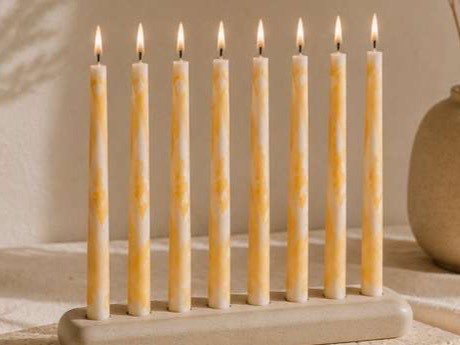
Pillars & moulded
Freestanding, no vessel cost, more fragile in transit.
Gift sets
Multiple scents boxed together — usually the best margin you have.
Lit amber glass candles with visible wax pools on a warm stone surface

What to know first

The things that decide your cost.

Most of what goes wrong on a first production run was decided before anyone poured anything. These are the choices worth understanding before you brief us — whoever you end up making it with.

01

Wax choice changes the product, not just the cost

Soy burns cooler and longer and is the usual choice for a natural-leaning brand, but it is prone to frosting — the pale crystalline bloom on the surface that customers often mistake for a defect. Paraffin throws fragrance more strongly and holds colour better. Coconut and soy blends sit between the two and are what most premium brands actually use. There is no best wax, only the one that matches what you are claiming on the label and what your customer will forgive.

02

The wick is the most common thing to get wrong

A wick too small tunnels, leaving a column of unburnt wax down the sides and a customer who feels cheated. Too large and it mushrooms, smokes and blackens the glass. Correct wick size depends on vessel diameter, wax type and fragrance load together — change any one of them and it has to be tested again. This is why a candle that was perfect in testing can fail after you switch jars.

03

Fragrance load has a ceiling

More fragrance oil does not keep making a stronger candle. Past the wax's capacity it stops binding, and the excess seeps out as a sticky film, clogs the wick or becomes a genuine safety problem. Most waxes sit somewhere around 6-10% by weight. A supplier promising dramatically more is either using a different wax than they said or has not burn-tested it.

04

Cure time is real and gets skipped

Poured candles need to rest before burning so the fragrance binds properly into the wax. Judged the day after pouring, a candle will under-perform the same batch tested a week later. If a quote has you shipping immediately after production, you are shipping an unfinished product.

Who does what

No surprises about where the work sits.

You decide

  • Vessel — the single biggest lever on your unit cost
  • Fragrance direction, and whether it needs to match an existing range
  • Wax preference, or the claim you want to make on the label
  • Label, carton and any gifting configuration
  • Volume, which is what makes vessel pricing move

We handle

  • Wax and fragrance selection against your brief and your price
  • Wick sizing and burn testing for your specific vessel
  • Pouring, curing, finishing and quality checks
  • Labelling, boxing and gift set assembly
  • Safety and care wording on the base, as required

Questions

Asked before every first order.

Do you have candle prices I can actually see?

Yes — candles are the one category where we publish real figures rather than quoting everything. The pricing page has the range by format. Final cost still moves with vessel, fragrance load and volume, but you can see where it starts instead of guessing.

Can I use my own jars?

Yes, and plenty of brands do. We will need to burn-test with your actual vessel before production rather than after, because wick sizing depends on its diameter and material. Send a sample jar early — it is the difference between a smooth run and a reformulation.

Why do some candles tunnel?

Almost always wick sizing, occasionally the first burn. A candle should burn until the melt pool reaches the edge of the vessel, which can take a few hours the first time. If it is extinguished before that, it sets a memory ring and will tunnel for the rest of its life. The wording on the base of the candle exists to prevent exactly this, and it is worth printing properly.

Can you do gift sets and hampers?

Yes, and they are usually worth more to you than single candles. Multiple scents boxed together carry better margin, make an easier gift purchase and move more units per order. We handle the assembly along with the box design and printing.

Send the brief. We'll tell you what it actually takes.

What you want to make, roughly how many, and when you need it. A reference product helps more than a paragraph of description.

Also making something else? We run perfume, cosmetics and candles from one place, so a brand launching across categories keeps a single point of contact.See pricing.